Total War: ATTILA

OUT NOW FOR macOS

In case you missed the imperial proclamation, Total War: ATTILA is out now on macOS, complete with native Apple Silicon support!

While many of ATTILA’s mechanics will be familiar to those who have already conquered the recently re-released Total War: ROME II, this game dials the clocks forward to the Migration Period, the fall of the Western Roman Empire, and the rise of Attila, one of history’s most fearsome warlords.

Within this new, turbulent setting, there is a sharp focus on devastation, environmental change, and simply fighting for survival. In this blog, we take a closer look at some of the new mechanics in ATTILA that bring the period to life and make for one of Total War’s most dynamic campaign maps.

Jump to:

People on the Move

At the top of the billing are movable factions - Hordes. These fall into two broad categories: Migrators and Nomads.

Nomadic Hordes

Attila’s Huns are a notable example of this playstyle, exclusively nomadic and unable to capture or build settlements. Instead, their vast cavalry armies act as ever-moving Encampments where rudimentary buildings can be constructed, and more units trained.
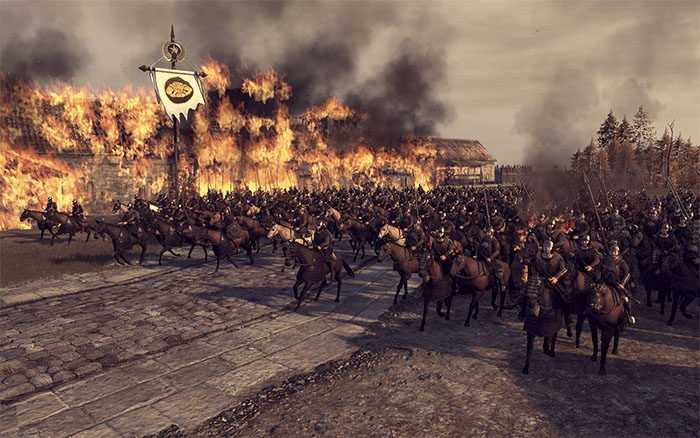
Rather than managing a settled economy, they rely on raiding the lands around them and razing the settlements of other factions to sustain and expand their armies. Those playing as a nomadic horde can also expect to be offered hefty sums of gold to spare potential targets from your onslaught. Whether you accept what is offered or take it all by force is up to you…

Lacking ties to any specific geographical area, they are free to carve a path of destruction in any direction and ravage any civilisation they come upon — in one campaign, they may sack Cairo and the entire Nile Delta, in another, they may reduce the hallowed city of Rome to ashes.

Migratory Hordes

A hybrid of the settled and nomadic, factions such as the Germanic Visigoths and Ostrogoths are known as Migrators. They begin the campaign much as any traditional Total War faction would, holding territory and developing settlements.

However, they face a multitude of existential threats (more on those later), and when the going gets tough, the Goths get going. By migrating, they may up-sticks entirely, scorch the earth behind them to deter pursuers, and temporarily become a mobile faction.
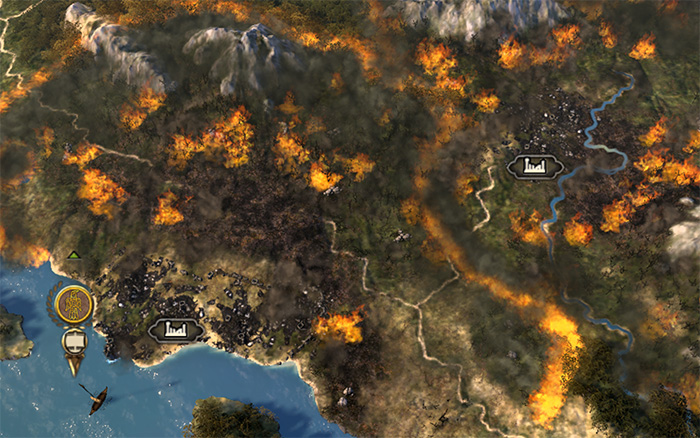
This allows them to relocate their entire population to new areas of the map, much as the Ostrogoths did after Theodoric the Great’s invasion of Italy and the creation of the Ostrogothic Kingdom centred on Ravenna.

Their unique resource is Population Growth. This is spent to construct buildings and to create new armies to move around the world map. Importantly, they are not able to grow while migrating. Instead, they must settle, even if temporarily, in order to accumulate resources, before moving on again.

While each migratory faction will have secondary objectives that guide players toward their historical destinations, you are free to move and settle wherever you please — but then, why move in the first place?
Fertility and Climate

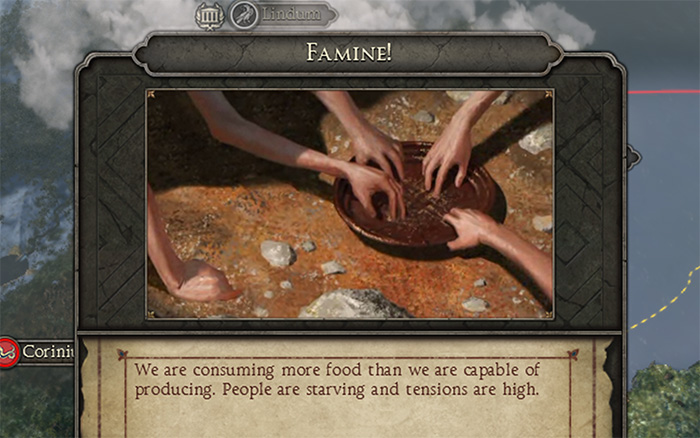
You cannot build a great empire if you cannot feed your people.

Food surpluses fuel the growth of settled factions, while food shortages hamper growth and cause withering attrition to armies. Food is most effectively gathered in areas of high Fertility.

Every province on the map has a Fertility level, which is influenced by a number of factors:

The presence of hordes in your territory is a drain on resources, even if they are allied... Devastation caused by the razing of settlements will also have a catastrophic impact on overall Fertility. However, not all problems are man-made…

The Migration Period was characterised by a rapidly cooling climate. From the beginning of the campaign onwards, an icy cold will grip the north of the campaign map, and slowly spread southward as the turns progress. As the climate cools, Fertility levels drop, making barren wastelands of once prosperous provinces.

This encourages the movement of both Migratory Hordes southwards to warmer climes and greener pastures. And where there are prosperous settlements, Nomadic raiders are rarely far behind…

But What of Rome?!

Powerful, ancient empires such as Rome, both Eastern and Western, cannot simply move out of the path of the coming storm. Instead, they must weather it or be swept aside by it.

When playing as one of these factions, you will be assailed by threats from every direction. Whether that be climate change-induced collapse in your breadbasket heartlands, or migratory peoples arriving at porous borders, this is not the Roman Empire of its glorious height. This is a fractured and faltering behemoth, teetering on the brink of failure.

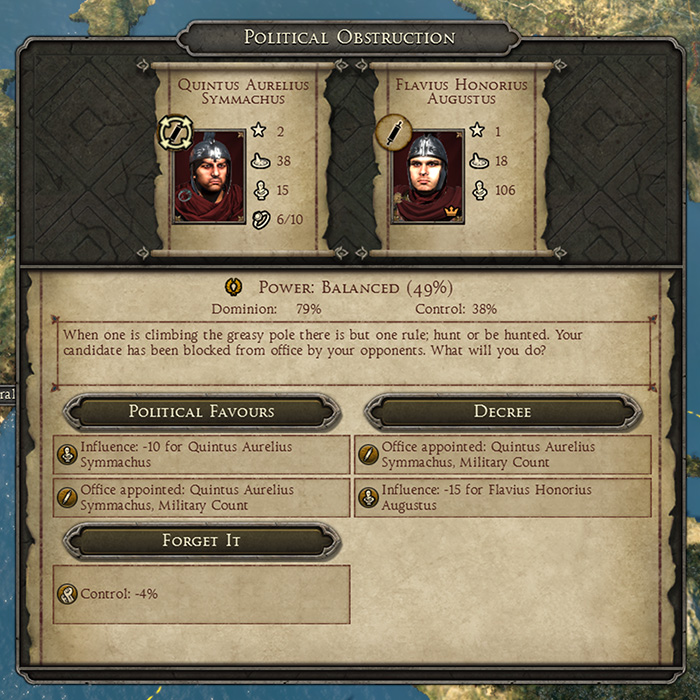
The dangers are not all external. Sensing weakness, the ruling families of Rome seek to grasp the levers of power. Players will have to balance their own family’s need for assistance with the ever-growing influence of these rivals, politicking and scheming to stay on top and avoid civil war.

Early on, theirs is not a campaign for world domination, but a brutal struggle for survival. And even if they stand firm against early threats, nothing can prepare them for the onslaught of the Hunnic hordes. Preserving Roman civilisation in the face of Attila himself is one of the toughest challenges of the entire franchise, but also the most rewarding.

Feeling up to the challenge? Or do you want to watch the world burn at the head of your own horde?

Head to the Feral Store, and seize Total War: ATTILA for macOS now:

Back to the top